
allergens
food handling
food allergy

Cleaning and sanitizing are essential parts of running a safe food service business. But the products used to keep kitchens clean can also introduce workplace hazards if they are not handled correctly.
From commercial dishwashing chemicals to degreasers and disinfectants, restaurant employees may work with products that require special handling, storage, or protective equipment.
That's where WHMIS training comes in.
The Workplace Hazardous Materials Information System (WHMIS) is Canada's national system for communicating information about hazardous products used in the workplace.
Understanding WHMIS helps employees recognize chemical hazards, interpret safety information, and take appropriate precautions while performing their daily tasks.
What Is WHMIS and Why Is It Important?
WHMIS stands for Workplace Hazardous Materials Information System.
It was developed to help protect Canadian workers by providing consistent information about hazardous products they may encounter on the job.
WHMIS uses three main communication tools:
Together, these elements help workers make informed decisions when using hazardous products.
WHMIS requirements are established through federal legislation and implemented alongside provincial, territorial, and federal occupational health and safety laws.
For employers, understanding these requirements is an important part of maintaining a safe workplace.
Why WHMIS Matters in Restaurants and Commercial Kitchens
Food safety and workplace safety are closely connected.
Restaurant employees regularly use cleaning and sanitizing products to maintain hygienic food preparation environments.
Some commercial products may present hazards such as skin irritation, chemical burns, respiratory irritation, or other harmful effects if used incorrectly.
For example, certain concentrated cleaning products may require dilution, specific protective equipment, or special storage conditions.
Employees need to understand the hazards of the products they use and follow the instructions provided by their employer and product manufacturer.
WHMIS education helps workers recognize the information they need to handle hazardous products more safely.
However, not every cleaning product falls under WHMIS. Some consumer products are exempt from WHMIS supplier labelling and Safety Data Sheet requirements, although employers still have responsibilities for protecting workers who use them.
Understanding these differences is part of developing a comprehensive workplace chemical safety program.
Understanding WHMIS Labels and Hazard Pictograms
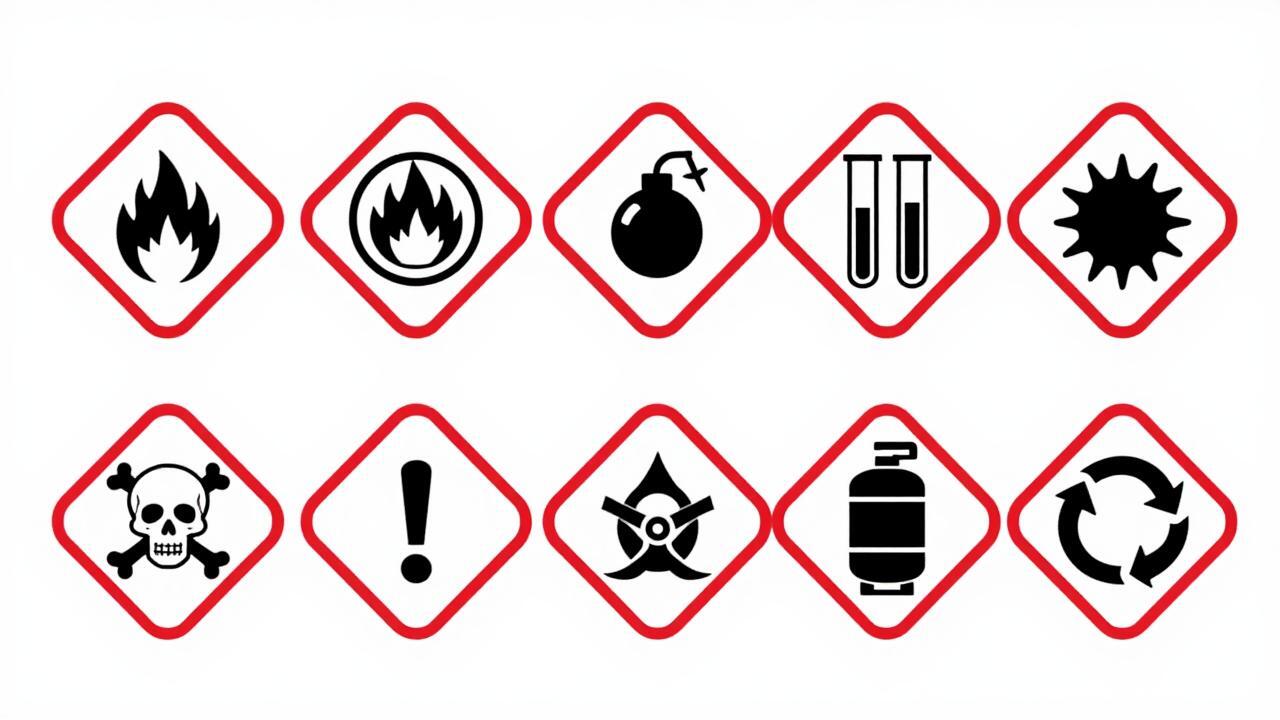
One of the most recognizable elements of WHMIS is its system of hazard pictograms.
These symbols help communicate the types of hazards associated with certain products.
For example:
Flame: Identifies certain fire hazards, including flammable products.
Corrosion: Warns of hazards such as serious skin burns, eye damage, or corrosion of metals.
Skull and Crossbones: Identifies products that may cause severe acute toxicity.
Exclamation Mark: Communicates certain health hazards, such as skin irritation or harmful acute toxicity.
Recognizing these symbols helps employees identify potential dangers before using a product.
However, pictograms are only one part of the information provided on a WHMIS label.
Workers should also understand the product identifier, signal word, hazard statements, and precautionary statements.
What Is a Safety Data Sheet (SDS)?
A Safety Data Sheet, commonly called an SDS, provides detailed information about a hazardous product.
SDSs are an essential part of WHMIS because they explain how products should be handled, stored, and used safely.
A standard WHMIS SDS follows a 16-section format and includes information such as:
For example, if an employee is unsure which protective gloves are appropriate for a particular cleaning chemical, the SDS can provide important information about recommended protective measures.
Employers must ensure that required SDSs are readily accessible to workers who may be exposed to the hazardous products covered by WHMIS.
Employees should know where to find this information and how to use it.
Is WHMIS Training Mandatory in Canada?
WHMIS education and training are required for workers who work with hazardous products covered by WHMIS or who may be exposed to them.
Employers are responsible for ensuring that affected employees receive appropriate education and training.
An important distinction is that WHMIS education and workplace-specific training are not exactly the same thing.
General WHMIS education helps employees understand the system, including labels, pictograms, hazard classes, and Safety Data Sheets.
Workplace-specific training addresses the actual hazardous products employees encounter and the procedures used at their workplace.
For example, an employee may complete an online WHMIS course and understand how to interpret chemical hazard information.
However, their employer must still provide appropriate instruction about the specific products, equipment, protective measures, and emergency procedures used in that workplace.
Completing a general WHMIS course is therefore an important educational step, but it does not automatically satisfy every employer's workplace-specific training obligations.
How WHMIS Training Supports Food Service Businesses
For restaurant owners and managers, workplace safety involves more than purchasing the right cleaning products.
Employees also need to understand how to use those products safely.
WHMIS education can support businesses by helping workers:
Recognize chemical hazards: Understand the risks associated with hazardous workplace products.
Interpret safety information: Read WHMIS labels and locate important information on Safety Data Sheets.
Follow safe handling practices: Understand why proper storage, protective equipment, and handling procedures matter.
Respond appropriately to concerns: Recognize when to seek additional instructions or consult workplace safety information.
For businesses with multiple locations, consistent general WHMIS education can help establish a shared foundation of knowledge across teams.
Employers can then build on that foundation with training tailored to each location's products and procedures.
WHMIS Training and Canadian Workplace Safety Requirements
WHMIS is supported by Canada's Hazardous Products Act and Hazardous Products Regulations, together with applicable occupational health and safety legislation.
The federal Hazardous Products Regulations were amended in 2022 to align Canadian hazard communication requirements with updated elements of the Globally Harmonized System of Classification and Labelling of Chemicals (GHS).
The transition period for suppliers to comply with these amendments ended on December 14, 2025.
As a result, employers and workers should use current WHMIS information and ensure that their workplace practices reflect applicable requirements.
Because occupational health and safety obligations can differ between provinces and territories, employers should also consult the legislation and guidance relevant to their location.
Learn the Fundamentals with Food Safety Market's WHMIS Course
Understanding workplace chemical hazards is an important part of creating a safer working environment.
Food Safety Market offers an online WHMIS course designed to provide general education about Canada's Workplace Hazardous Materials Information System.
The course can help employees develop foundational knowledge of hazard communication and understand the information used to identify and manage hazardous workplace products.
For employers, general WHMIS education can be a useful starting point for supporting workplace safety, alongside the specific training and procedures required for their operations.
Whether you work in a restaurant, commercial kitchen, food production facility, or another workplace where hazardous products are present, understanding WHMIS is a valuable part of workplace safety education.
Explore Food Safety Market's online WHMIS training course and take the next step toward building a safer workplace.
Frequently Asked Questions About WHMIS Training in Canada
What does WHMIS stand for?
WHMIS stands for Workplace Hazardous Materials Information System. It is Canada's national system for communicating information about hazardous products used in workplaces.
Is WHMIS training required for restaurant employees?
Restaurant employees who work with or may be exposed to WHMIS hazardous products require appropriate education and training. The requirements depend on the hazardous products present and the applicable occupational health and safety legislation.
Can WHMIS training be completed online?
Yes. General WHMIS education can be completed online. Employers must also ensure that workers receive appropriate workplace-specific training related to the hazardous products and procedures at their workplace.
Does WHMIS certification expire in Canada?
WHMIS legislation does not establish a single nationwide expiry date for general WHMIS training certificates. Employers must ensure workers remain adequately educated and trained, including when workplace hazards, products, or procedures change. Some employers may establish their own refresher training schedules.
Is WHMIS the same as food handler certification?
No. WHMIS focuses on hazardous products and workplace chemical safety. Food handler certification focuses on safe food handling practices, including contamination prevention, food temperatures, hygiene, and foodborne illness prevention. The two types of education address different workplace risks.