

Facility design and maintenance
Food premises must be designed and maintained to support safe, sanitary food handling. This includes adequate handwashing stations, hot and cold running water, sewage disposal, lighting, ventilation, and pest control.
Food businesses in Alberta must follow provincial food safety requirements designed to protect the public and reduce the risk of foodborne illness. These requirements apply to many food operations, including restaurants, cafeterias, caterers, bakeries, bars, lounges, mobile food trucks, butcher shops, delicatessens, work camps, and some care facilities.
In Alberta, the main regulation is the Food Regulation, Alberta Regulation 31/2006. The Regulation covers food handling permits, facility requirements, sanitation, hygiene, pest control, temperature control, food sources, food handler health, and food safety training. The Food Retail and Foodservices Code is also adopted as part of the Regulation and is used with the Regulation to set food safety standards for foodservice and food retail operations.
Under Alberta’s food safety training requirements, at least one person in care and control of a food facility must be certified in food safety. When six or more food handlers, including serving staff, are working on-site, a certified person must be present at the facility. When five or fewer food handlers are working on-site, the certified person may be off-site.
Alberta Health Services strongly recommends food safety training for everyone who handles food, even when a facility is exempt from mandatory certification. A Public Health Inspector may also require additional food safety training based on observations made during an inspection.
Food Safety Market’s Managing Food Safety (MFS) food handler certification course is listed by the Government of Alberta as an approved course to meet Section 31 of the Food Regulation. The Government of Alberta’s May 2026 recognized course list includes Freeborn and Associates Inc. — Managing Food Safety (MFS), classroom and online.
Most commercial food establishments in Alberta require a valid food handling permit before operating. Alberta Health Services provides guidance and application resources for food facilities, including starting a food business, food handling permit applications, low-risk home-prepared foods, mobile food establishments, and permit fees.
The Food Regulation states that a person must not operate a food establishment unless the operator holds a valid permit and the food establishment is identified on that permit. Commercial food establishments must apply for a food handling permit and operate in accordance with the Regulation.
Alberta food establishments must meet requirements related to:
Food premises must be designed and maintained to support safe, sanitary food handling. This includes adequate handwashing stations, hot and cold running water, sewage disposal, lighting, ventilation, and pest control.
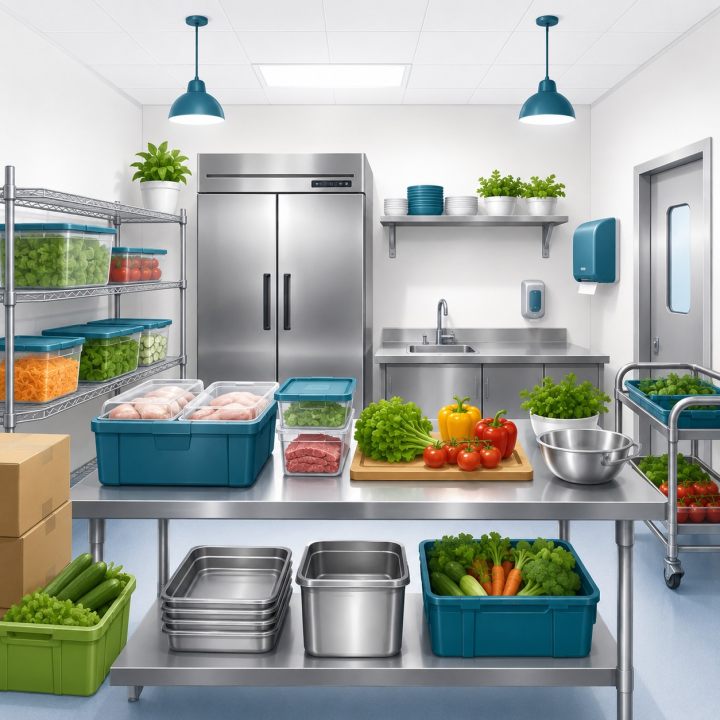
Food must be protected from contamination, handled in a sanitary manner, and obtained from approved or inspected sources where required.
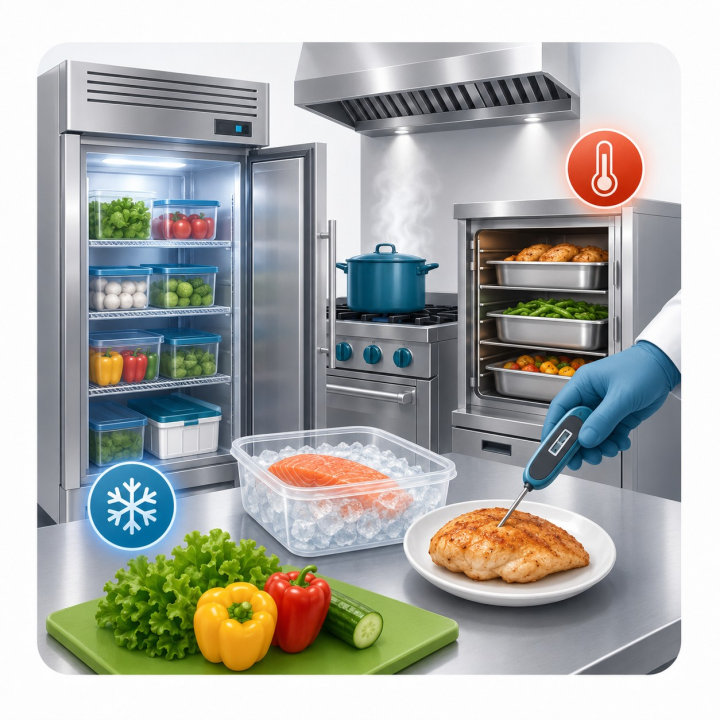
High-risk foods must be stored, displayed, and transported at safe temperatures, generally not more than 4°C for cold holding or not less than 60°C for hot holding, unless an executive officer authorizes an alternative.

Commercial food establishments must maintain facilities, equipment, utensils, and food-contact surfaces in sanitary condition. Written sanitation procedures must include cleaning and sanitizing requirements and a list of cleaning and sanitizing agents, including their concentrations and uses.

Food handlers must maintain cleanliness and good personal hygiene, wash hands as often as necessary, and avoid behaviours that could contaminate food or food areas.
Alberta’s Food Regulation includes requirements for farmers’ markets, special events, temporary food establishments, community organization functions, and low-risk home-prepared food. Special event organizers and temporary food establishment operators may need to notify the regional health authority in the required form and manner.
Low-risk home-prepared food is handled differently from commercial food operations. The Regulation includes specific rules for low-risk home-prepared food, and AHS provides resources for operators through its business guidance pages.
The provincial food safety rules apply across Alberta, including Calgary, Edmonton, Red Deer, Lethbridge, Medicine Hat, Grande Prairie, Banff, and other communities. However, municipalities may also have local business licensing, zoning, patio, waste, signage, or fire safety requirements. Food businesses should check both provincial food safety requirements and local municipal requirements before opening or changing operations.
The main regulation is Alberta’s Food Regulation, AR 31/2006. It sets requirements for food handling permits, food establishments, sanitation, hygiene, temperature control, food safety training, farmers’ markets, special events, and related food operations.
Food safety requirements are enforced through Alberta’s public health system, including Alberta Health Services Environmental Public Health and Public Health Inspectors.
At least one certified person is required. If six or more food handlers are working on-site, including serving staff, the certified person must be at the facility. If five or fewer food handlers are working on-site, the certified person may be off-site.
Not necessarily. The Regulation sets minimum certification requirements, but Alberta Health Services strongly recommends food safety training for everyone who handles food.
Yes. The Government of Alberta’s recognized course list includes Managing Food Safety (MFS) by Freeborn & Associates Inc. for classroom and online delivery.
Most commercial food establishments require a food handling permit before operating. Alberta Health Services provides permit and business-startup resources for food facilities.
Last reviewed: June 2026. Regulations can change. Always confirm current requirements with Alberta Health Services or your local Public Health Inspector.